

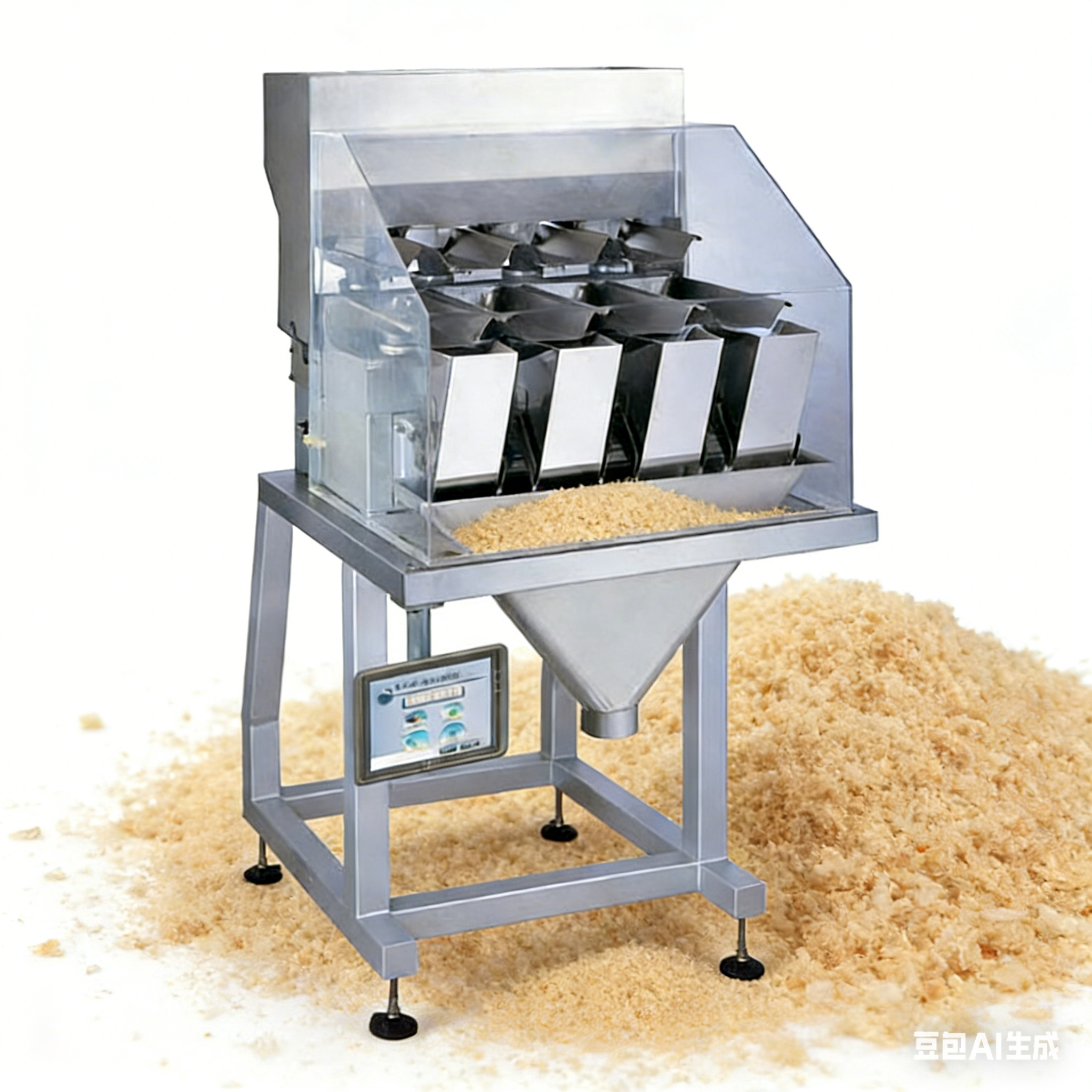
As a core metering equipment in packaging production lines, the service life and accuracy of linear scales directly affect production efficiency and costs. Standardized operation and scientific maintenance can significantly extend the equipment’s service life and reduce failure rates, helping enterprises achieve cost reduction and efficiency improvement.
In daily use, it is crucial to strictly control the load. The weighing should not exceed 80% of the rated range. Materials should be placed and taken gently to avoid impact damage to the sensor. Before starting the machine, zero calibration must be performed to ensure measurement accuracy. During operation, parameters should be monitored in real time, and timely troubleshooting should be carried out in case of uneven feeding or weighing fluctuations.
Cleaning and maintenance are key links. Dust should be removed at the end of each shift, and in-depth cleaning should be done weekly: after power failure, disassemble the hopper and tray, wipe them with a soft cloth dipped in neutral detergent, and never rinse electrical components with a high-pressure water gun. Check the vibration motor bolts and sensor lines monthly, and fasten or replace aging components in a timely manner.
Environmental protection cannot be ignored. Place the equipment on a flat, vibration-free surface, away from magnetic fields and heat sources. Control temperature and humidity to prevent moisture and dust, reducing external interference. Have professional personnel calibrate the sensor quarterly to ensure long-term stable operation.
Scientific use and maintenance of linear scales not only ensure measurement accuracy but also extend the equipment’s service life, laying a solid foundation for enterprises to reduce costs, improve efficiency and maintain stable production.
Post time: Mar-31-2026